
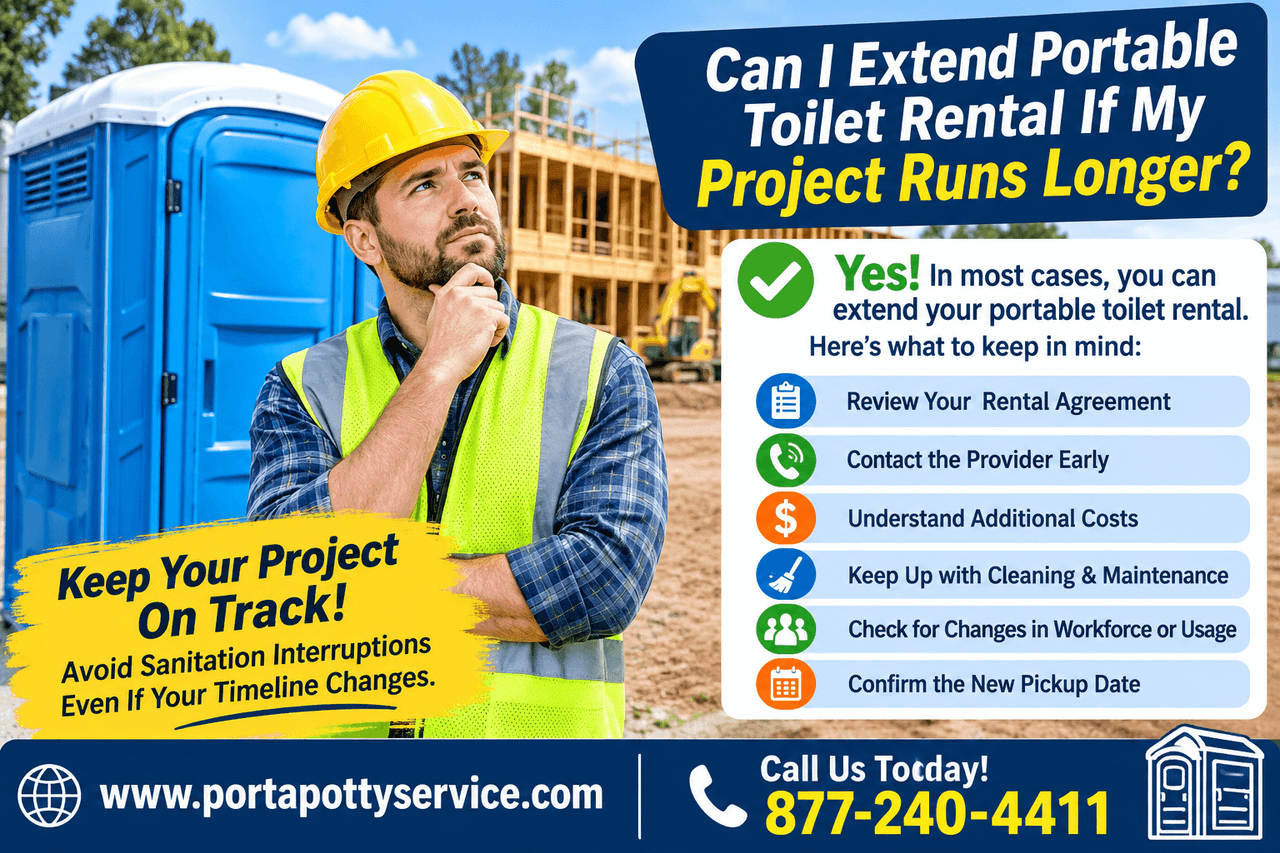
Can I Extend a Portable Toilet Rental If My Project Runs Longer Than Expected?
Project timelines do not always go according to plan. Construction delays, unexpected weather conditions, additional work requirements, material shortages, and scheduling changes can extend a project beyond its original completion date. When portable toilets are rented for a specific period, one common question is whether the rental can be extended if the project takes longer than expected.
The answer is generally yes. Portable toilet rental periods can often be extended, depending on the rental agreement, equipment availability, and service arrangements. Understanding how extensions work can help prevent sanitation interruptions and keep a project operating smoothly.
1. Review the Original Rental Agreement
The first step is to review the original rental agreement. It usually identifies the scheduled rental period, delivery date, planned pickup date, service frequency, and applicable rental terms.
Some agreements allow extensions on a daily, weekly, or monthly basis, while others may require confirmation before the original rental period expires. Reviewing these details helps determine the available extension options and any additional charges.
2. Notify the Rental Provider Before the Pickup Date
If a construction project or event is expected to continue beyond its scheduled completion date, communicate the revised timeline as early as possible.
Waiting until the scheduled pickup day can create unnecessary complications. The equipment may already be assigned to another customer, or a pickup schedule may have been arranged.
Providing advance notice allows the rental provider to review the request and coordinate the extended rental period.
3. Understand Additional Rental Costs
Extending a portable toilet rental may involve additional charges. These costs depend on the rental agreement, equipment type, rental duration, and servicing requirements.
Possible additional charges include:
Daily or weekly rental extension fees.
Additional cleaning and waste removal services.
Restocking of toilet paper, hand sanitizer, and other supplies.
Additional maintenance visits.
Transportation or scheduling adjustments, if applicable.
It is important to understand how the extension will affect the total rental cost before confirming the revised schedule.
4. Maintain Regular Cleaning and Maintenance
Keeping portable toilets clean becomes especially important when a project extends beyond its original timeline.
Longer rental periods generally require continued servicing to maintain proper sanitation. Depending on the number of workers, daily usage, and restroom capacity, the existing cleaning schedule may need to be adjusted.
Regular maintenance may include:
Pumping and removing accumulated waste.
Cleaning and disinfecting interior surfaces.
Refilling hand sanitizer and other hygiene supplies.
Replenishing toilet paper.
Checking locks, ventilation, and general equipment condition.
A suitable servicing schedule helps maintain a hygienic environment throughout the extended project.
5. Consider Changes in Workforce or Usage
An extended project may involve changes in workforce size or daily restroom usage. For example, a construction site that initially requires two portable toilets may need additional units if more workers join the project.
Before extending the rental, evaluate whether the existing number of units is still appropriate.
Consider the following factors:
Current number of workers.
Daily operating hours.
Number of shifts.
Expected project duration.
Distance between work areas and restroom facilities.
If usage increases significantly, additional portable toilets or more frequent servicing may be necessary.
6. Account for Weather and Unexpected Delays
Weather conditions can significantly affect project schedules. Heavy rainfall, flooding, strong winds, extreme temperatures, and other environmental conditions may delay construction activities.
When these situations occur, portable toilet facilities may need to remain at the site until work resumes and the project is completed.
It is also important to check whether severe weather has affected restroom placement, accessibility, stability, or servicing arrangements. Any damaged or unsafe equipment should be reported for inspection.
7. Confirm the New Pickup Date
Once the extension is approved, confirm the revised rental end date and pickup arrangements.
Keeping an updated record of the new schedule helps avoid confusion between project managers, site supervisors, and service providers.
If the project completion date changes again, communicate the updated information as soon as possible.
Extending a portable toilet rental when a project runs longer than expected is generally possible. The process involves reviewing the original agreement, notifying the rental provider, understanding additional costs, maintaining regular sanitation services, and confirming a revised pickup date.
Whether the extension involves a few extra days or several additional weeks, proper planning helps prevent restroom shortages and sanitation problems. Keeping portable toilet facilities available throughout the actual project duration supports worker comfort, hygiene, and uninterrupted site operations.