
Labor Day is traditionally associated with community celebrations, outdoor festivals, family gatherings, concerts, sporting activities, and public events. As these gatherings attract larger crowds, organizers must consider essential facilities that contribute to a safe, comfortable, and well-organized environment. Among these requirements, restroom facilities play an important role, particularly at outdoor venues where permanent restrooms may be limited.
A recent Labor Day event provided a useful case study on the need for fancy portable toilet rentals. The celebration was organized at a large outdoor venue with multiple activity areas, food vendors, entertainment spaces, and gathering points. Organizers anticipated continuous attendance throughout the day and recognized that the existing restroom infrastructure might not adequately support the expected number of guests.
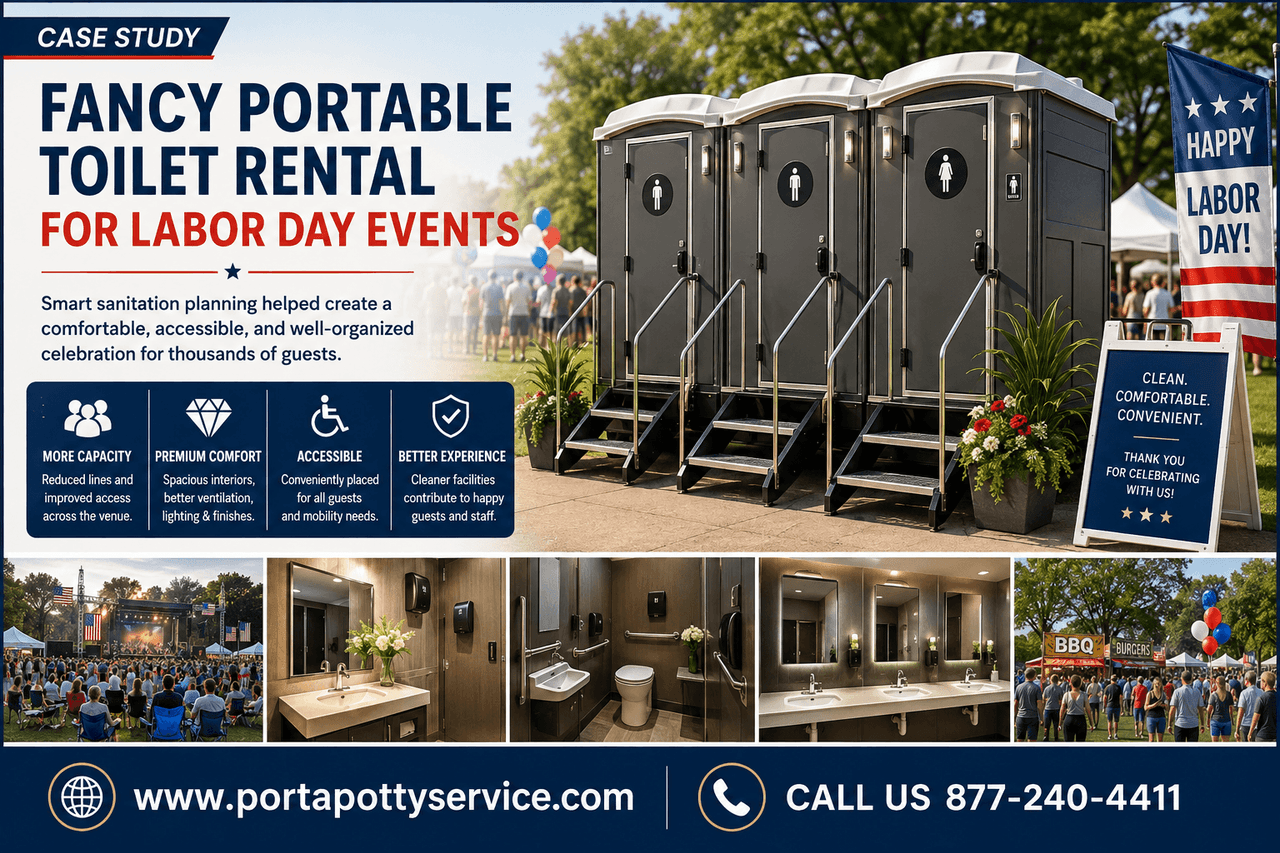
Instead of depending entirely on permanent facilities, temporary restroom units were incorporated into the event layout. Fancy portable toilets were selected to provide additional capacity while offering a more comfortable environment for visitors. Their placement throughout the venue allowed guests to access restroom facilities closer to the areas where activities were taking place.
The restroom units were positioned according to anticipated crowd movement and high-traffic areas. This approach helped distribute restroom usage across the venue rather than concentrating demand in one location. During peak attendance periods, this arrangement helped reduce pressure on permanent restrooms and supported smoother movement around the event grounds.
Comfort was another consideration. Fancy portable toilets can provide features such as improved interior space, lighting, ventilation, mirrors, handwashing areas, and upgraded finishes. These features can be particularly useful during events where guests remain at the venue for several hours.
Accessibility was also included in the event planning process. Restroom facilities needed to be positioned where they could be reached conveniently by guests with different mobility requirements. Proper placement helped reduce unnecessary travel and made restroom access more practical for a wider range of attendees.
Event staff and vendors also benefited from having temporary restroom facilities available near operational areas. Staff members could access nearby units without leaving their assigned sections for extended periods, helping maintain continuity during the celebration.
The Labor Day case study demonstrated that restroom planning should be considered alongside crowd management, food service, parking, entertainment, and emergency planning. The number and type of restroom facilities required can depend on expected attendance, event duration, venue layout, existing infrastructure, and accessibility needs.
For large outdoor Labor Day gatherings, fancy portable toilets can serve as an important part of temporary sanitation planning. Providing sufficient restroom capacity helps reduce congestion, improve accessibility, and support a more comfortable experience for guests, staff, and vendors.
The case study ultimately highlights the importance of evaluating sanitation requirements well before a major outdoor event begins. Careful restroom planning can help organizers respond effectively to changing attendance levels and maintain an organized environment throughout the celebration.