
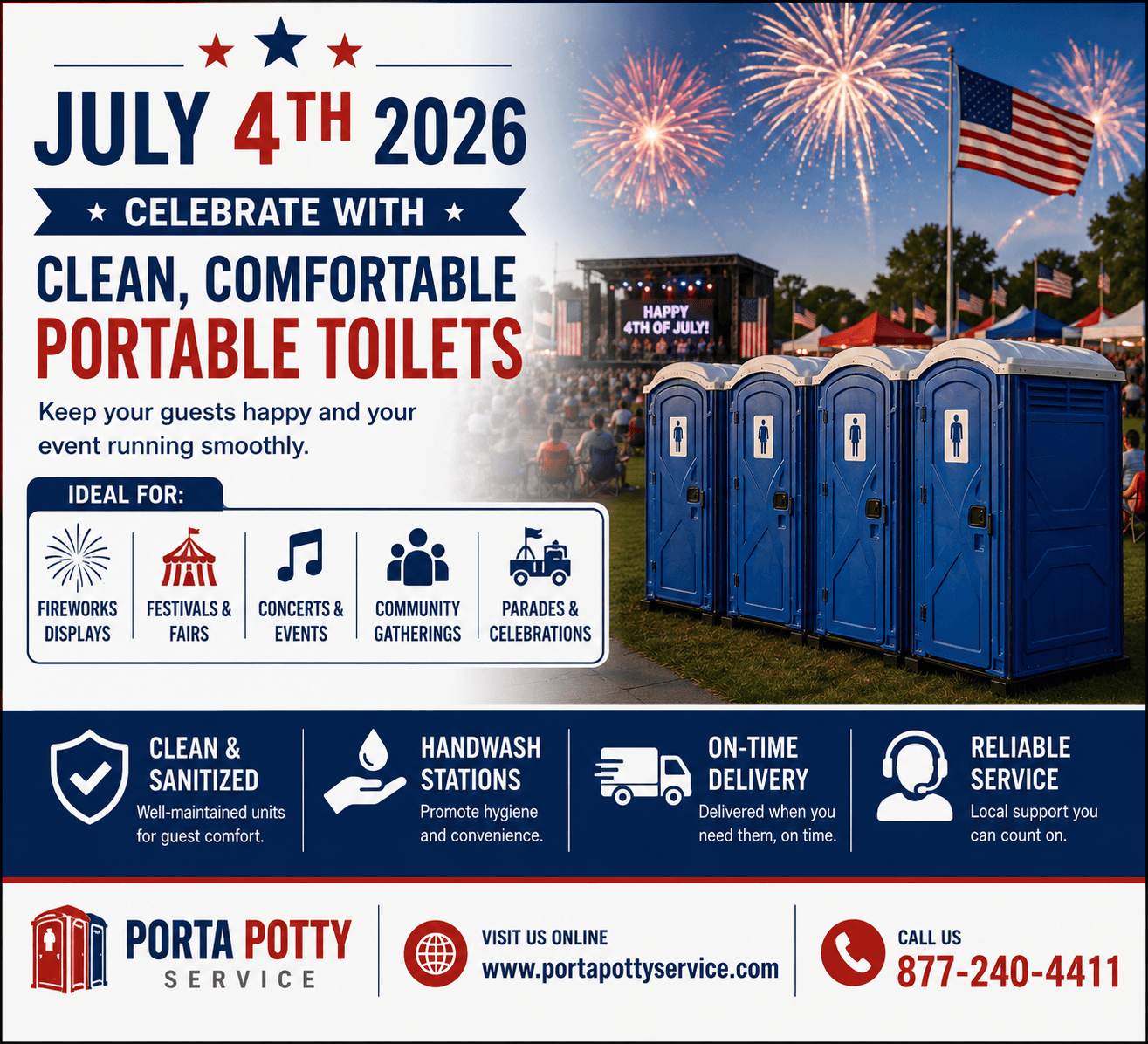
A regional community organization hosted its annual July 4th Independence Day celebration in 2026, featuring a fireworks display, live entertainment, food vendors, children's activities, and community exhibits. The event attracted approximately 10,000 attendees throughout the day, making it one of the largest celebrations in the area.
In previous years, organizers faced challenges related to restroom accessibility. Long wait times, overcrowded permanent facilities, and limited sanitation resources created operational concerns and impacted the overall attendee experience.
To address these issues, organizers incorporated a comprehensive portable restroom plan as part of their event infrastructure strategy.
The Challenge
The venue's permanent restroom facilities were designed for everyday park usage and were not capable of accommodating the significantly larger crowds expected during Independence Day festivities.
Event planners identified several key concerns:
High restroom demand during peak attendance hours
Long lines near existing facilities
Increased sanitation requirements
Need for accessible restroom options
Guest comfort during a full-day event
Support for food vendor and staff operations
The goal was to provide sufficient restroom capacity while maintaining a clean and organized environment throughout the celebration.
The Solution
Organizers developed a portable restroom deployment plan based on attendance projections, venue layout, and expected traffic patterns.
Portable toilets were strategically placed throughout the event grounds, including:
Main Festival Area
Several restroom stations were positioned near the central entertainment zone where visitors gathered for concerts, activities, and community programs.
Food Vendor Section
Additional units were installed near food and beverage vendors to support increased demand during meal periods.
Fireworks Viewing Areas
Portable restrooms were placed near designated viewing locations to provide convenient access for guests remaining on-site during the evening.
Staff and Volunteer Zones
Dedicated restroom facilities were made available for event personnel, vendors, and volunteers working throughout the day.
Handwashing Stations
Handwashing stations were installed alongside restroom areas to support sanitation and encourage proper hygiene practices.
Implementation
Portable restroom units were delivered and installed prior to event setup activities. Placement was carefully coordinated to ensure:
Easy public access
Clear pedestrian flow
Accessibility compliance
Efficient servicing if needed
Minimal impact on event operations
Signage throughout the venue directed attendees to nearby restroom locations, helping distribute usage evenly across the site.
Results
Reduced Wait Times
Attendees experienced significantly shorter restroom lines compared to previous years. The increased restroom capacity allowed guests to spend more time enjoying event activities and less time waiting in queues.
Improved Guest Satisfaction
Feedback collected after the event indicated that restroom accessibility was noticeably improved. Visitors appreciated the convenience of having facilities located throughout the venue.
Better Event Flow
By distributing restroom stations across multiple areas, organizers reduced congestion around permanent facilities and improved pedestrian movement throughout the event.
Enhanced Sanitation
The addition of portable toilets and handwashing stations helped maintain cleanliness during a high-attendance event. Event staff reported fewer sanitation-related concerns than in previous years.
Support for Vendors and Staff
Dedicated restroom access helped vendors and event personnel perform their duties more efficiently without relying solely on public facilities.
Key Lessons Learned
Several important planning strategies contributed to the success of the restroom program:
Plan Based on Attendance
Estimating attendance accurately helped organizers determine the appropriate number of restroom units required.
Distribute Facilities Across the Venue
Strategic placement reduced congestion and improved accessibility.
Include Handwashing Stations
Additional hygiene resources enhanced sanitation efforts and guest convenience.
Consider Peak Usage Times
Understanding crowd behavior helped planners position units where demand would be highest throughout the day.
Coordinate Early
Early planning allowed organizers to integrate sanitation infrastructure into the overall event layout and operations plan.
Conclusion
This July 4th 2026 case study demonstrates the important role portable toilet rentals play in supporting successful Independence Day celebrations. By expanding restroom capacity, improving accessibility, and enhancing sanitation resources, organizers were able to create a more comfortable and efficient environment for thousands of attendees.
For large community gatherings, festivals, fireworks displays, concerts, and public events, proper restroom planning remains a critical component of event management. When incorporated into a comprehensive site strategy, portable restroom rentals help improve guest experiences while supporting the smooth operation of Independence Day celebrations.