
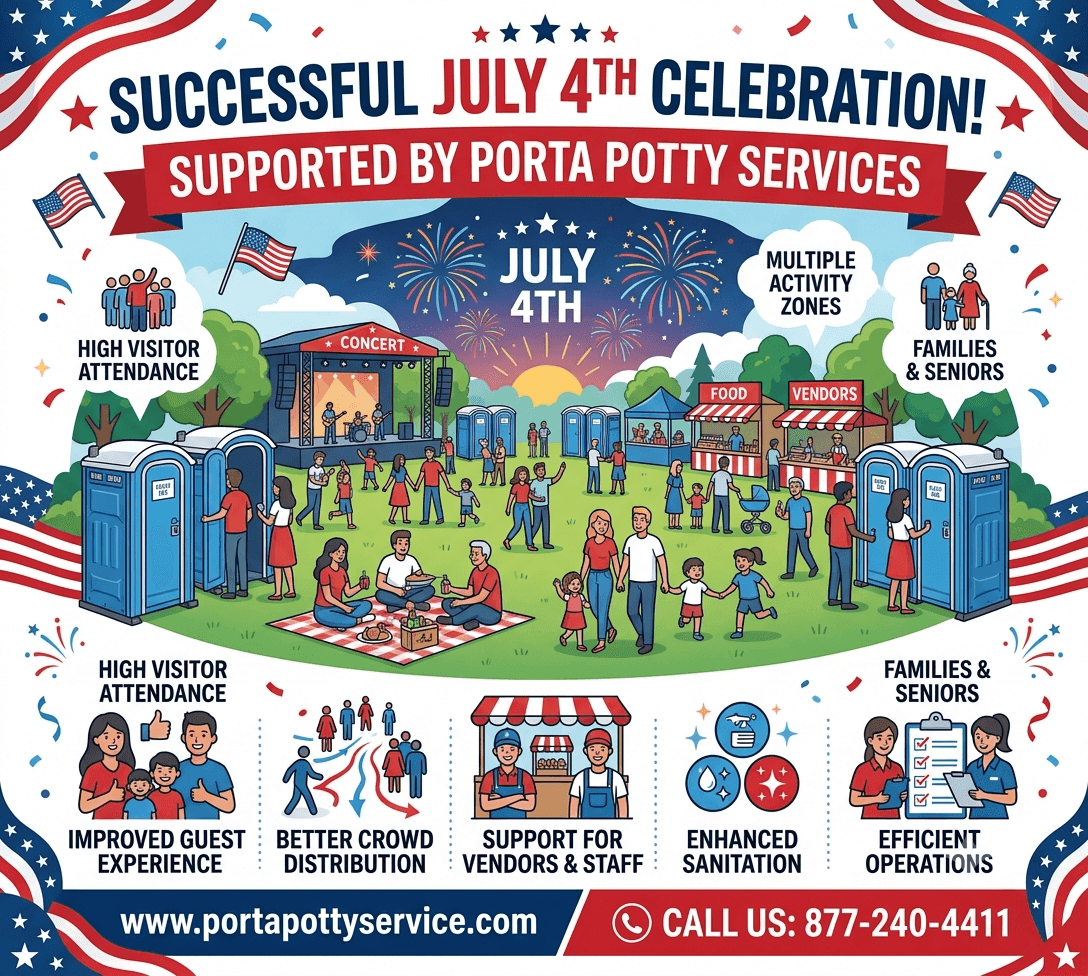
Every year, Independence Day celebrations bring together thousands of people for fireworks displays, parades, concerts, food festivals, and family-friendly activities. While entertainment is the centerpiece of these events, organizers must also plan for essential services that support public comfort, sanitation, and overall event operations.
This case study examines how portable restroom services contributed to the success of a large July 4th community celebration, demonstrating the importance of proper sanitation planning for outdoor public events.
Event Overview
A city-hosted Independence Day celebration was organized at a public park featuring live music, children's activities, local food vendors, community exhibits, and an evening fireworks display. The event welcomed an estimated 15,000 visitors over the course of the day.
With limited permanent restroom facilities available at the venue, organizers recognized the need for additional sanitation resources to accommodate the expected attendance.
The Challenge
Several planning challenges were identified during the preparation phase:
High visitor attendance throughout the day
Long event duration extending into the evening
Limited permanent restroom infrastructure
Multiple activity zones spread across the venue
Families with young children and senior attendees requiring convenient restroom access
Food and beverage vendors serving large crowds
Without additional restroom facilities, organizers anticipated longer waiting times, congestion near existing restrooms, and reduced visitor satisfaction.
Planning the Solution
To address these challenges, portable restroom facilities were incorporated into the overall site plan.
Event planners evaluated several factors before determining restroom placement, including:
Expected attendance
Event duration
Venue size
Pedestrian traffic patterns
Accessibility requirements
Vendor and staff locations
Emergency access routes
Rather than concentrating all units in one location, portable restrooms were distributed throughout the venue to improve accessibility and reduce walking distances for attendees.
Implementation
Installation was completed prior to the event, allowing organizers to coordinate restroom placement with other event infrastructure.
Portable restrooms were positioned near:
Main entrances
Food vendor areas
Children's activity zones
Concert seating areas
Fireworks viewing locations
Parking access points
Volunteer and staff operations
Accessible units were included to support guests with mobility needs, ensuring restroom facilities were available to a diverse range of attendees.
Throughout the celebration, routine servicing and monitoring helped maintain cleanliness and usability as visitor numbers increased.
Results
Improved Guest Experience
Convenient restroom locations reduced travel time for attendees and minimized crowding around permanent facilities. Families, seniors, and visitors attending the event for several hours benefited from improved restroom accessibility.
Better Crowd Distribution
Because restroom facilities were strategically placed across the venue, attendees naturally dispersed throughout the event grounds rather than gathering in one area. This contributed to smoother pedestrian movement during peak attendance.
Support for Vendors and Staff
Dedicated restroom access near operational areas allowed vendors, volunteers, performers, and event staff to remain focused on their responsibilities without leaving their work zones for extended periods.
Enhanced Sanitation
Routine servicing throughout the event helped maintain clean restroom conditions despite heavy usage. This contributed to a cleaner environment and supported overall public health objectives.
Efficient Event Operations
The availability of adequate sanitation facilities reduced operational challenges and allowed organizers to focus on managing activities, entertainment, and public safety.
Key Takeaways
The event highlighted several best practices for planning restroom services during large Independence Day celebrations:
Estimate restroom needs based on expected attendance and event duration.
Distribute portable restrooms throughout the venue to improve accessibility.
Include accessible units to accommodate all guests.
Coordinate restroom placement with vendor areas, entertainment zones, and pedestrian routes.
Schedule routine maintenance to maintain cleanliness during high-traffic events.
Integrate sanitation planning with the overall event management strategy.
Conclusion
This July 4th case study demonstrates that portable restroom services are an essential component of successful outdoor event planning. By providing convenient sanitation facilities across the venue, organizers enhanced guest comfort, improved accessibility, supported event staff, and maintained a cleaner environment throughout the celebration.
As Independence Day events continue to attract large crowds each year, thoughtful sanitation planning remains a key factor in delivering safe, organized, and enjoyable experiences for communities. Portable restroom services not only address practical infrastructure needs but also contribute to the overall success