
Background
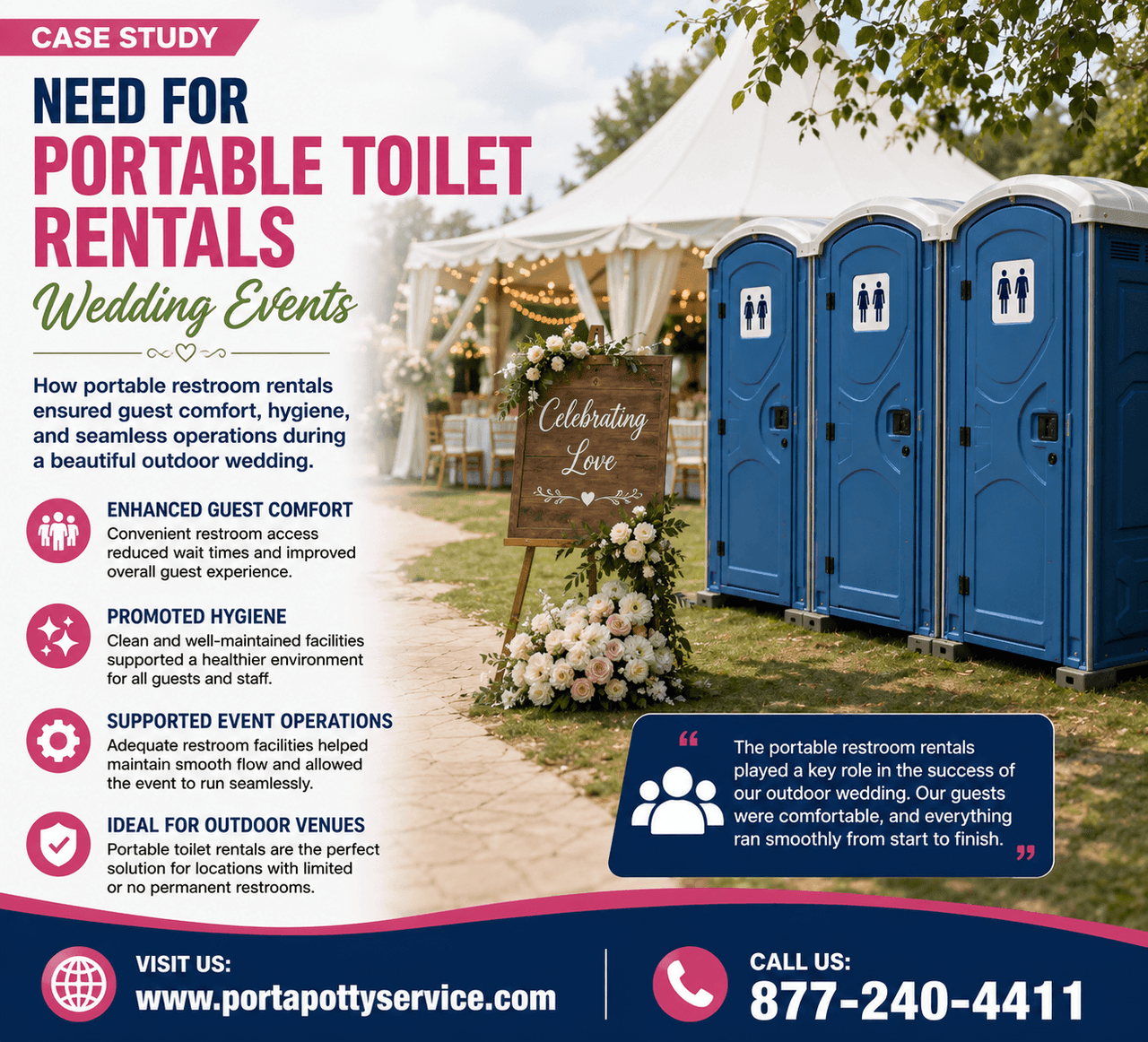
Outdoor weddings continue to grow in popularity, offering couples scenic venues such as gardens, vineyards, beaches, parks, farms, and private estates. While these locations provide memorable settings for ceremonies and receptions, they often lack sufficient permanent restroom facilities to accommodate large numbers of guests.
This case study examines how portable toilet rentals supported sanitation, guest comfort, and event operations during a full-day outdoor wedding celebration attended by approximately 250 guests.
The Challenge
The wedding venue featured expansive outdoor spaces for the ceremony, cocktail hour, dinner reception, and evening entertainment. Although the property included limited indoor restroom facilities, planners determined they would not adequately serve guests throughout the event.
Several challenges were identified during the planning process:
High guest attendance
Ceremony and reception lasting more than 10 hours
Limited permanent restroom facilities
Multiple activity areas across the venue
Elderly guests and families with young children requiring convenient restroom access
Catering staff, photographers, musicians, and event personnel needing dedicated facilities
Without additional restroom accommodations, organizers anticipated long waiting times, congestion near existing facilities, and interruptions to the event schedule.
Planning the Solution
Event planners evaluated restroom requirements based on several factors, including expected attendance, event duration, venue layout, accessibility needs, and vendor operations.
Portable restroom units were incorporated into the site plan and strategically positioned to provide convenient access while preserving the wedding's appearance. Placement focused on balancing guest convenience with maintaining the visual appeal of the venue.
Restroom locations included:
Near guest parking areas
Adjacent to the reception tent
Close to outdoor dining spaces
Within reasonable walking distance of the ceremony site
Separate facilities for vendors and event staff
Accessible restroom units and handwashing stations were also included to support guest comfort and hygiene.
Event Operations
Portable restroom facilities were installed before the wedding day, allowing planners to coordinate placement with catering equipment, seating arrangements, entertainment stages, and decorative elements.
Throughout the celebration, routine monitoring ensured restroom facilities remained clean, well-stocked, and fully operational despite continuous use. Staff coordinated maintenance during quieter periods to minimize disruption to guests.
The distributed layout reduced crowding and allowed guests to access restroom facilities without leaving major event activities for extended periods.
Results
Improved Guest Comfort
Convenient restroom access allowed guests to enjoy the ceremony and reception without long walks or extended waiting times. Families, seniors, and children particularly benefited from nearby facilities.
Reduced Congestion
Providing multiple restroom locations minimized lines near permanent facilities and helped maintain smooth guest movement throughout the venue.
Better Support for Event Staff
Dedicated restroom facilities for caterers, entertainers, photographers, coordinators, and venue personnel reduced interruptions to event operations and allowed staff to remain focused on their responsibilities.
Enhanced Venue Cleanliness
The availability of sufficient restroom facilities contributed to a cleaner environment while supporting proper sanitation throughout the event.
Seamless Event Experience
Adequate restroom planning helped organizers concentrate on coordinating the wedding schedule, entertainment, and guest services without sanitation-related disruptions.
Key Takeaways
The wedding demonstrated several best practices for outdoor event sanitation planning:
Estimate restroom needs based on guest count and event duration.
Position restroom facilities near key activity areas while preserving venue aesthetics.
Include accessible restroom units for guests with mobility needs.
Provide separate facilities for vendors and event staff when appropriate.
Incorporate handwashing stations to support hygiene.
Schedule routine servicing to maintain cleanliness during extended events.
Conclusion
This case study demonstrates that portable toilet rentals play an important role in the success of outdoor weddings. Thoughtful restroom planning enhances guest comfort, improves accessibility, supports event staff, and helps maintain a clean and organized venue throughout the celebration.
As outdoor weddings continue to attract larger guest lists and take place in unique locations, portable restroom facilities remain an essential component of event planning. By integrating sanitation into the overall event strategy, organizers can create a more enjoyable and seamless experience for guests while supporting efficient event operations from the ceremony through the final celebration.