
Case Study:
Large sports tournaments and recreational events often bring together athletes, coaches, volunteers, officials, and spectators for several hours or even multiple days. Whether hosted at public parks, athletic complexes, school grounds, or community recreation fields, these events require thoughtful planning to ensure visitors have access to clean, convenient restroom facilities.
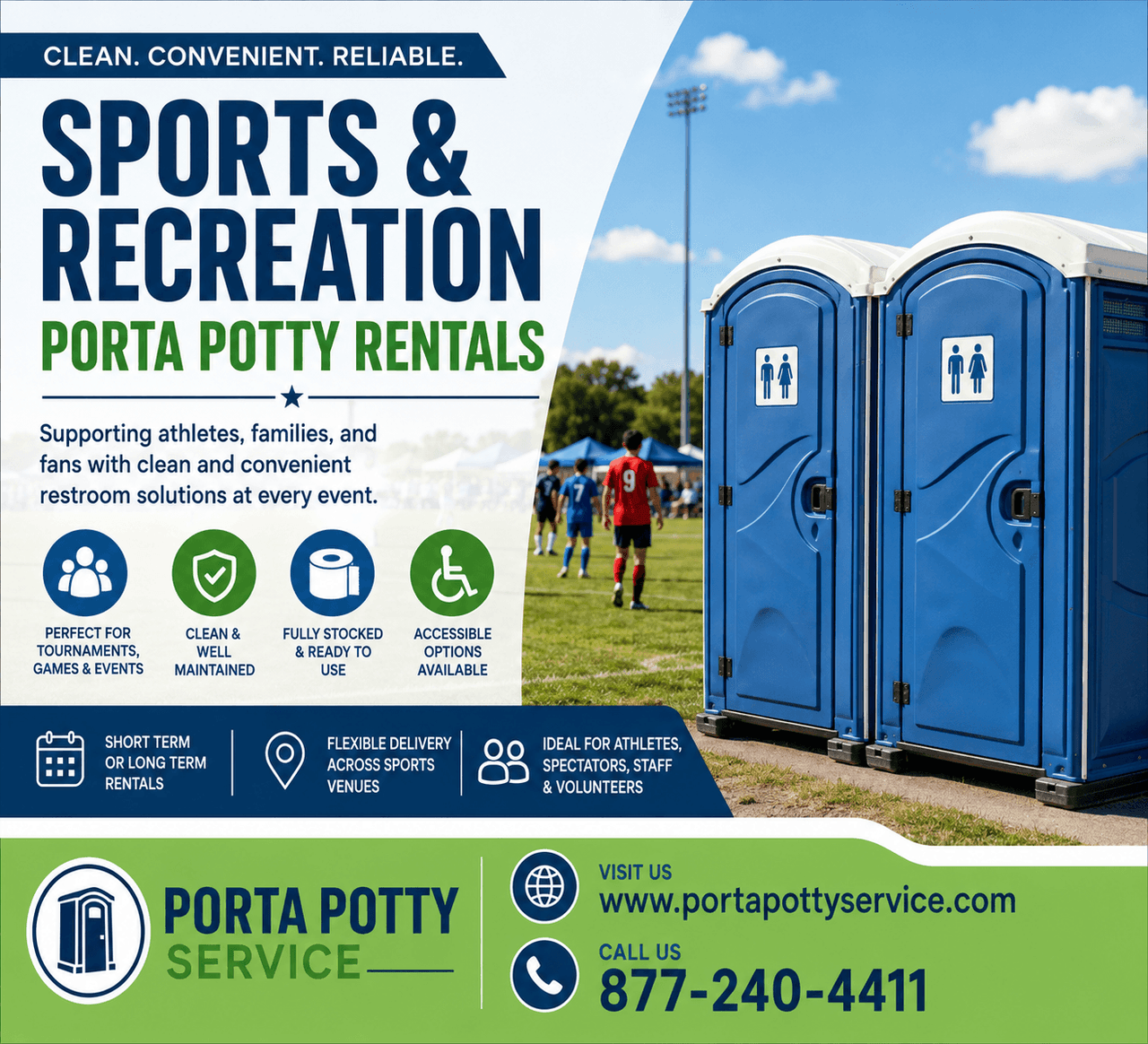
This case study examines how portable restroom rentals helped support sanitation, attendee comfort, and smooth event operations during a three-day regional sports tournament held across several outdoor playing fields. The event featured youth soccer matches, recreational activities, food vendors, and family entertainment, attracting approximately 5,000 visitors throughout the weekend.
Event Challenges
The sports complex included several outdoor fields spread across a large property. While permanent restroom buildings were available near the main entrance, they were not sufficient to accommodate the number of participants and spectators moving between multiple competition areas.
Event organizers identified several logistical challenges before the tournament began:
Thousands of athletes and spectators were expected over three consecutive days.
Activity was distributed across multiple fields, creating long walking distances to permanent restrooms.
Games were scheduled from early morning until evening.
Families with young children required convenient restroom access.
Food vendors increased demand for sanitation facilities.
Volunteers and staff needed nearby restroom options to remain at their assigned locations.
Providing adequate restroom access became an important part of the event's operational planning.
Planning the Restroom Strategy
Organizers reviewed the tournament schedule, estimated attendance, field layout, and duration of daily activities to determine restroom placement.
Portable restroom units were strategically positioned throughout the venue rather than concentrating all facilities in one location. Placement considered:
Main spectator seating areas
Athletic field clusters
Food court and concession zones
Parking lot entrances
Volunteer headquarters
Registration and information tents
Children's recreation areas
This distributed approach reduced walking distances and helped balance restroom usage across the venue.
Accessibility Considerations
The event welcomed participants and visitors of all ages and abilities. Accessible portable restrooms were positioned near major gathering areas to improve convenience for individuals using mobility devices, seniors, and families assisting relatives with special accessibility needs.
Wide entrances, ground-level access, and convenient placement helped improve the overall visitor experience while supporting inclusive event planning.
Hygiene and Sanitation
Maintaining cleanliness throughout a multi-day sporting event required routine servicing and scheduled maintenance.
A sanitation plan included:
Regular inspections during operating hours
Restocking toilet paper and hand sanitizer
Waste level monitoring
Cleaning high-traffic units
Addressing unexpected maintenance needs promptly
These scheduled service intervals helped ensure facilities remained clean and functional from the first game each morning until the final matches concluded.
Supporting Athletes and Officials
Athletes, referees, coaches, and tournament staff followed tightly scheduled competition timelines. Having restroom facilities located near each group of fields minimized unnecessary travel between games.
Officials were able to remain close to competition areas while maintaining match schedules, and coaches could continue supervising players without extended absences.
The availability of nearby facilities also benefited medical volunteers, security personnel, and event coordinators responsible for supporting tournament operations.
Enhancing the Spectator Experience
Comfortable amenities contribute significantly to the overall experience at outdoor sporting events.
Parents watching multiple games throughout the day appreciated having restroom facilities within short walking distance of seating areas. Children were able to access facilities quickly, reducing disruptions during matches.
Visitors spending several hours at the complex were more comfortable remaining onsite throughout the day's activities because essential sanitation facilities were readily available.
Supporting Food Service Operations
Food trucks and concession vendors experienced steady customer traffic during meal periods and between scheduled games.
Convenient restroom access near dining areas supported public hygiene expectations while reducing crowd movement toward permanent restroom buildings. This helped maintain orderly pedestrian flow around vendor locations and minimized congestion in central areas of the complex.
Environmental and Site Management
Managing large crowds also involves protecting the event grounds and surrounding facilities.
Providing adequate restroom access throughout the venue helped discourage misuse of nearby buildings and reduced unnecessary traffic into adjacent public facilities. Concentrated foot traffic around permanent restroom buildings was minimized, helping preserve landscaping and improve crowd distribution.
Waste management teams coordinated servicing schedules alongside general site cleanup operations to maintain a clean environment during the tournament.
Results
The portable restroom plan contributed to several positive operational outcomes during the event:
Reduced restroom wait times during peak attendance.
Improved convenience across multiple athletic fields.
Better accessibility for visitors with mobility needs.
Consistent sanitation throughout the three-day tournament.
Improved crowd movement by distributing restroom locations.
Support for athletes, coaches, volunteers, and officials.
Enhanced comfort for families attending full-day competitions.
Cleaner public spaces through effective sanitation planning.
These outcomes demonstrated how temporary restroom facilities can support both participant satisfaction and efficient event management.
Lessons Learned
Outdoor sports tournaments require more than athletic facilities to operate successfully. Essential infrastructure—including sanitation services—plays an important role in maintaining comfort, health, and operational efficiency.
Planning restroom capacity based on expected attendance, event duration, venue size, and participant movement helps organizers prepare for increased demand while reducing inconvenience for visitors.
Strategic placement, routine servicing, accessible facilities, and ongoing maintenance all contribute to creating a positive experience for athletes, spectators, volunteers, and staff.
Conclusion
Sports and recreational events depend on careful coordination across many operational areas, and sanitation planning is one of the most important considerations. Portable restroom rentals provide a practical solution when permanent facilities are limited or located far from activity areas.
By evaluating attendance, venue layout, accessibility requirements, and maintenance schedules, event organizers can create a cleaner, more comfortable environment that supports successful outdoor competitions while meeting the needs of diverse participants and visitors.