Order By - 877-240-4411

Blog

Blog Posts

Organizing the wedding flawlessly is the toughest job, when organized at outdoor place it more difficulty. Restroom arrangements have quite importance for occasion celebrations and for other purposes as well.

Construction Site Porta Potty Requirements & Rental Guidelines

Construction Site Porta Potty Requirements & Rental Guidelines

06/02/2026 01:51:04

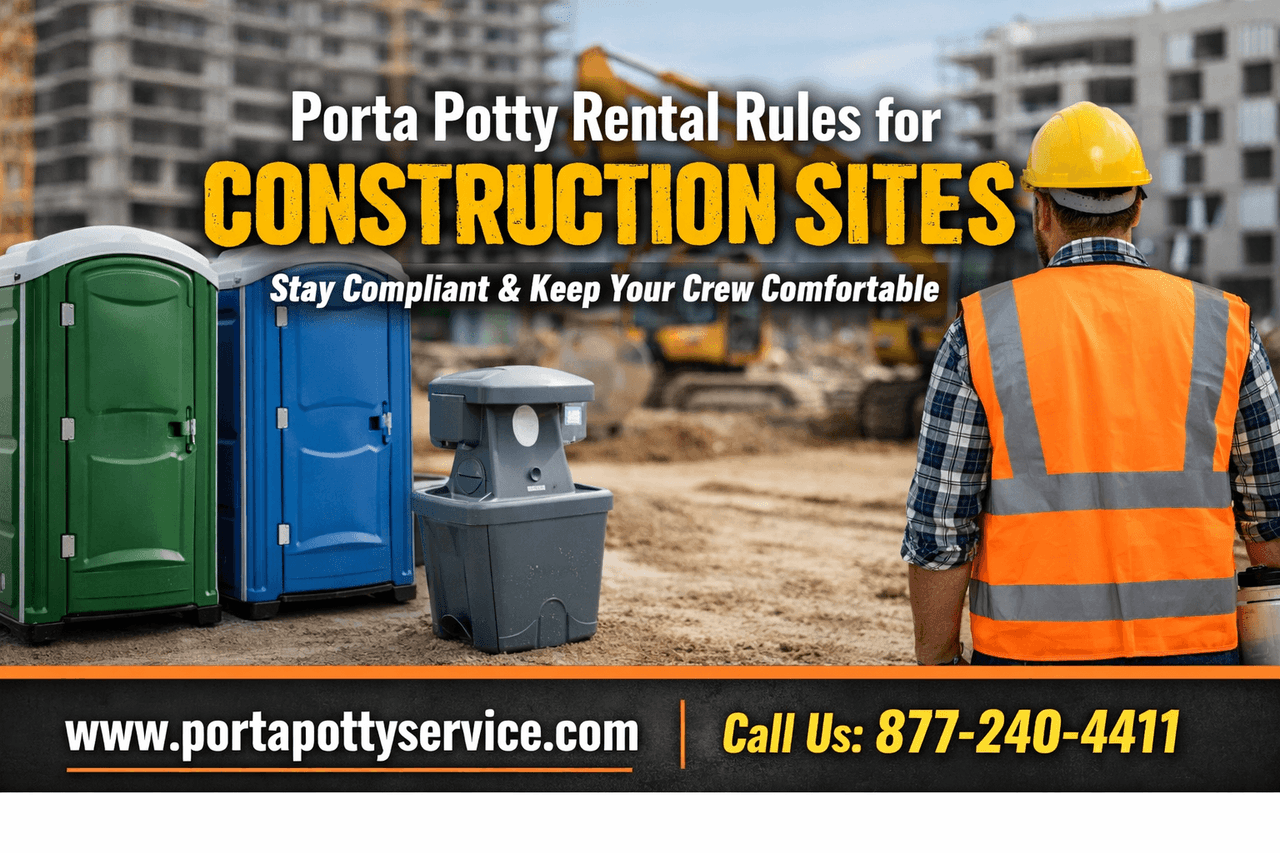
Porta Potty Rental Rules for Construction Sites: What You Need to Know

When you’re running a construction project, there’s a lot to manage—materials, schedules, inspections, safety protocols, and crew productivity. One important detail that often gets overlooked until the last minute is proper restroom access.

Portable toilets aren’t just a convenience on job sites—they’re a requirement. Following the right porta potty rental rules helps you stay compliant, keep workers comfortable, and avoid costly delays or fines.

Here’s a simple breakdown of the most important rules and best practices for porta potty rentals on construction sites.

Why Porta Potties Are Required on Construction Sites

Construction sites are temporary work environments, but that doesn’t mean basic sanitation can be ignored. Providing clean and accessible restrooms is essential for:

Worker health and hygiene

Job site safety

Productivity and morale

Meeting OSHA and local compliance standards

A well-maintained portable toilet setup is a sign of a professional, well-managed site.

OSHA Restroom Requirements for Construction Sites

The Occupational Safety and Health Administration (OSHA) sets minimum sanitation rules for employers. According to OSHA standards, construction site restrooms must be:

Easily accessible to workers

Adequate in number based on crew size

Maintained in a sanitary condition

Stocked with supplies like toilet paper

General OSHA Porta Potty Guidelines by Crew Size

A common rule of thumb is:

1 toilet for 1–10 workers

2 toilets for 11–25 workers

3 toilets for 26–50 workers

More units as the crew grows

Having too few restrooms can lead to long lines, lost work time, and non-compliance issues.

Placement Rules: Where Porta Potties Should Be Located

Proper placement matters just as much as having enough units. Portable toilets should be:

Close enough for easy access

Positioned on stable, level ground

Located away from heavy equipment traffic

Accessible for servicing trucks

Restrooms should not be placed too far from active work zones, especially on large job sites. Workers should be able to reach them quickly without walking across unsafe areas.

Cleaning and Servicing Requirements

One of the biggest rental rules on construction sites is routine maintenance. Portable toilets must be serviced regularly to stay sanitary and usable.

Typical Service Frequency

Weekly cleaning is standard for most job sites

More frequent service may be needed for large crews or hot weather

Restocking supplies is included during servicing

A dirty or overflowing unit is not only unpleasant—it can become a health hazard and a compliance issue.

ADA Compliance for Construction Site Restrooms

Construction sites must also consider accessibility requirements. If the site is open to the public or includes employees with disabilities, you may need:

ADA-compliant portable toilets

Ground-level access

Wider doorways and interior space

Even if not legally required in every situation, offering ADA units is often a smart and professional choice.

Handwashing Station Recommendations

While porta potties handle restroom needs, proper hygiene also requires handwashing access.

Many job sites choose to add:

Standalone handwashing stations

Units with built-in sinks

Hand sanitizer dispensers

Handwashing is especially important for sites involving food, public workspaces, or long-term projects.

Permits and Local Construction Rules

Beyond OSHA, many cities and counties have their own portable toilet requirements. Depending on your location, you may need to follow rules regarding:

Placement on public streets or sidewalks

Minimum number of units per permit

Restroom screening or fencing

Service documentation

It’s always best to work with a rental provider familiar with local construction regulations.

Best Practices for Porta Potty Rentals on Job Sites

To keep your site running smoothly, follow these proven tips:

Choose the Right Type of Unit

Standard units work for most sites, but larger projects may benefit from:

Flushable portable toilets

High-rise units

Restroom trailers for office staff

Plan Ahead

Don’t wait until the crew arrives. Schedule delivery before work begins to stay compliant from day one.

Keep Units Secure

Use proper placement, lighting, and sometimes temporary fencing to prevent vandalism or misuse after hours.

Communicate with Your Rental Provider

A good provider will help you adjust unit count, servicing frequency, and upgrades as your project grows.

Stay Compliant, Keep Crews Comfortable

Porta potty rental rules for construction sites aren’t just about checking a box—they’re about creating a safe, efficient, and respectful workplace.

By meeting OSHA requirements, planning proper placement, ensuring regular servicing, and choosing the right units, you protect your crew and keep your project on track.

If you’re managing a construction site, partnering with a reliable portable toilet rental company makes all the difference.